
Exploring Cancer Through Molecular Biology
Cancer is not a single disease.
It is a complex biological process shaped by genetic alterations, molecular interactions, cellular states, signaling networks, and changes within the surrounding biological environment.
Onco Molecular Biotech explores these mechanisms through a molecular and biotechnology-driven perspective, connecting biological knowledge with modern analytical approaches to better understand cancer complexity.
From molecular alterations and cellular behavior to biomarkers, computational analysis, and emerging biotechnologies, our approach focuses on the mechanisms that define cancer at the molecular level.
Understanding the molecular landscape. Exploring biological complexity. Advancing oncology research.
The Molecular Perspective on Cancer
Cancer research increasingly depends on understanding what happens beyond the visible characteristics of a tumor.
At the molecular level, cancer involves interconnected changes affecting:
- DNA and genomic stability
- RNA expression
- Protein activity
- Cell signaling
- Epigenetic regulation
- Cellular metabolism
- Immune interactions
- Cell differentiation
- Tumor heterogeneity
- Microenvironmental communication
Studying these dimensions together can reveal biological patterns that may remain hidden when cancer is considered from only one perspective.
Onco Molecular Biotech focuses on this molecular layer of oncology, where biological mechanisms, analytical technologies, and computational methods intersect.

From Molecular Alterations to Cancer Biology
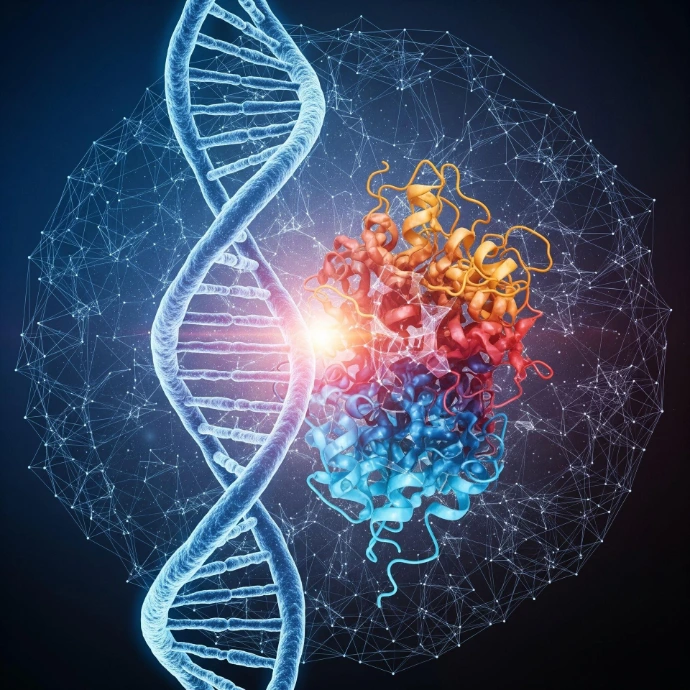
A cancer cell is characterized by a constantly changing molecular environment.
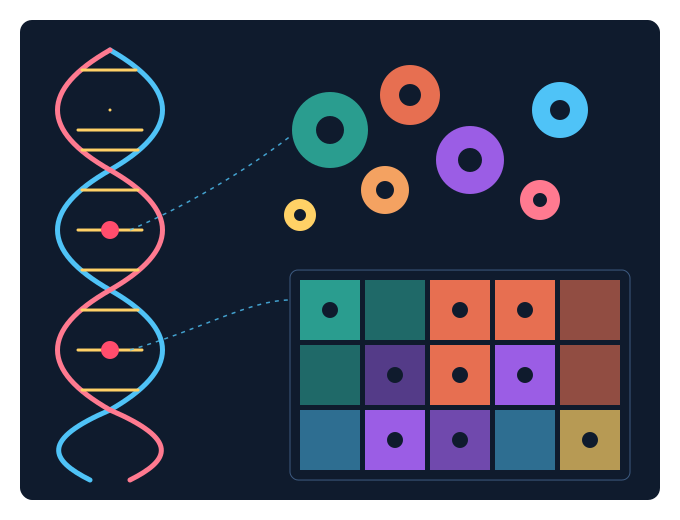
Genetic mutations can modify proteins.
Altered proteins can affect signaling pathways.
Signaling changes can influence cellular proliferation, survival, migration, metabolism, and differentiation.
These changes can further modify interactions between tumor cells and surrounding cells.
This creates a dynamic biological system in which multiple molecular processes influence one another.
Understanding these relationships is essential for studying how tumors emerge, evolve, adapt, and respond to their environment.
Our Research Perspective
Molecular Oncology
Molecular oncology investigates cancer through the biological mechanisms that operate inside and around tumor cells.
It connects cancer biology with molecular genetics, cellular biology, biochemistry, biotechnology, and computational analysis.
Key areas include:
- Oncogenic signaling .Learn more
- Molecular alterations
- Cancer-associated pathways
- Genetic and epigenetic regulation
- Tumor cell states
- Molecular biomarkers
- Cancer heterogeneity
- Cellular adaptation
- Molecular mechanisms of disease progression
Cancer Genomics
The genome contains information that can help reveal how cancer cells differ from normal cells.
Genomic approaches can investigate:
- Somatic mutations
- Copy-number alterations
- Structural variants
- Gene fusions
- Genomic instability
- Mutational patterns
- Driver alterations
- Tumor evolution
Modern sequencing technologies allow researchers to examine increasingly complex genomic landscapes.
The interpretation of these data requires integration between molecular biology, bioinformatics, statistics, and cancer biology.
Transcriptomic Complexity
Genes do not operate independently.
Their expression changes according to cellular identity, environmental conditions, signaling activity, developmental state, and disease-associated processes.
Transcriptomic approaches provide a way to investigate these changes at large scale.
Research can examine:
- Differential gene expression
- Transcriptional signatures
- Regulatory networks
- Gene-expression patterns
- Pathway activity
- Cellular states
- Tumor heterogeneity
- Molecular subtypes
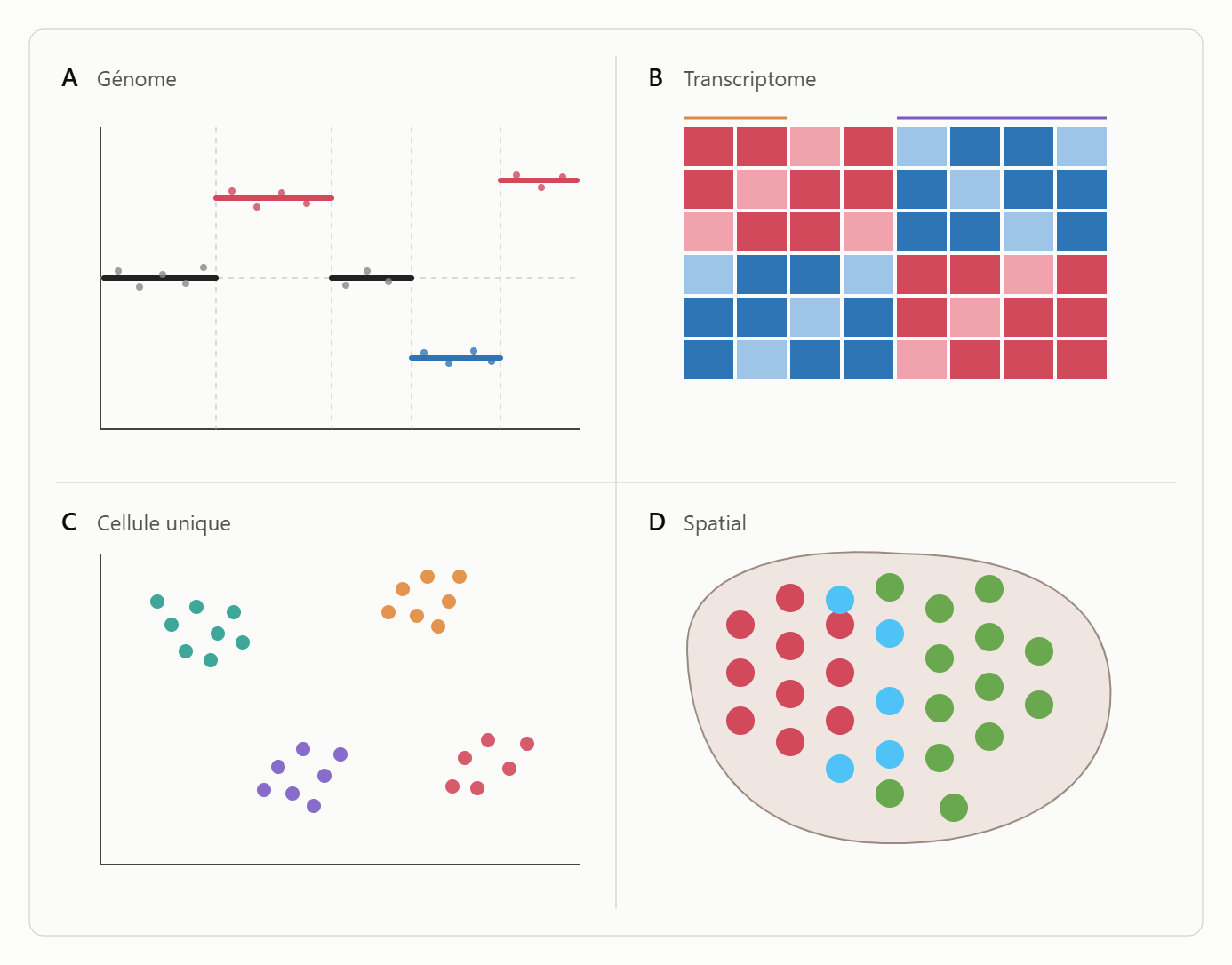
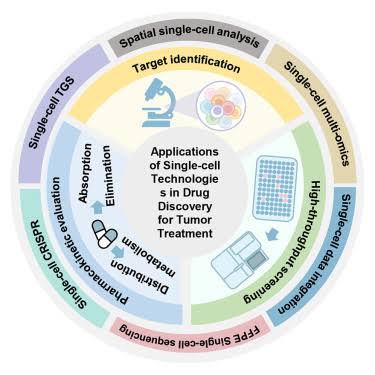
The increasing availability of single-cell and spatial technologies provides additional opportunities to examine cancer at unprecedented biological resolution.
Single-Cell Oncology
Tumors are composed of heterogeneous populations of cells.
Two cells located within the same tumor can exhibit very different molecular profiles, functional states, and responses to their environment.
Single-cell technologies help researchers investigate this complexity by examining molecular information at the level of individual cells.
Potential applications include:
- Cell-type identification
- Tumor-cell characterization
- Rare-cell detection
- Cellular-state analysis
- Tumor heterogeneity
- Immune-cell profiling
- Cell-cell communication
- Molecular evolution
- Treatment-response investigation
Single-cell analysis transforms the question from:
“What is happening in this tumor?”
to:
“Which cells are driving which biological processes?”
Spatial Biology
Molecular information becomes even more informative when it is connected to location.
Spatial technologies allow researchers to investigate molecular features while preserving information about where cells and biological signals are positioned within tissue.
This can help explore:
- Tumor architecture
- Cellular neighborhoods
- Immune infiltration
- Tumor-stroma interactions
- Spatial gene expression
- Molecular gradients
- Cell-cell proximity
- Tissue organization
Spatial biology creates a bridge between molecular profiling and tissue structure.
Biomarkers
Biomarkers can provide measurable molecular information about biological processes.
In oncology, biomarkers may be associated with:
- Disease classification
- Tumor characteristics
- Molecular subtypes
- Disease progression
- Treatment response
- Treatment resistance
- Biological activity
- Patient stratification
The identification of meaningful biomarkers requires more than detecting a molecular difference.
A useful biomarker must be investigated within an appropriate biological and analytical context.
Biomarker Discovery
Modern biotechnology generates enormous quantities of molecular data.
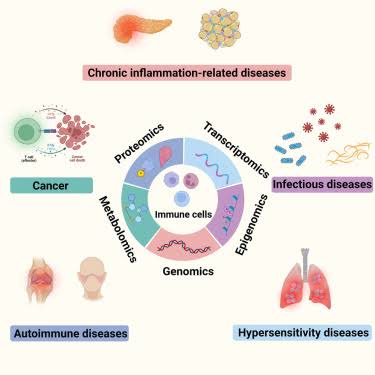
Genomics, transcriptomics, proteomics, metabolomics, and imaging can each provide different perspectives on cancer biology.
Integrating these datasets can reveal relationships between molecular features that may not be visible within a single dataset.
A biomarker discovery workflow may involve:
Sample → Molecular profiling → Data processing → Feature identification → Statistical analysis → Biological interpretation → Validation
This multidisciplinary process connects laboratory science with computational biology.
Artificial Intelligence in Oncology Research
Artificial intelligence and machine learning are increasingly being explored in biomedical research.
Potential applications include:
- Molecular pattern recognition
- Biomarker prioritization
- Image analysis
- Classification
- Predictive modeling
- Multi-omics integration
- Drug-response modeling
- Patient stratification research
AI does not replace biological interpretation.
Its value depends on high-quality data, appropriate models, robust validation, and meaningful biological questions.

Multi-Omics Integration 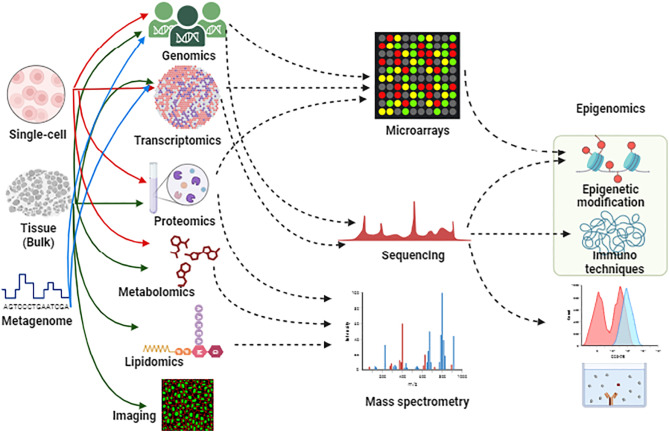

Cancer biology operates across multiple molecular layers.
Genomics can reveal DNA alterations.
Transcriptomics can reveal changes in RNA expression.
Proteomics can investigate protein-level consequences.
Metabolomics can describe changes in cellular metabolism.
Integrating these layers can provide a more complete representation of biological systems.

Genomics
What has changed in the genome?
Transcriptomics
Which genes are being expressed differently?

Proteomics
Which proteins and signaling processes are altered?

Metabolomics
How has cellular metabolism changed?
Integration
How are these molecular layers connected?
Connecting Disciplines
The most meaningful advances in molecular oncology often occur at the intersection of different disciplines.
Biochemistry
Exploring molecular reactions and cellular processes.
Biotechnology
Developing technologies to measure biological systems.
Genomics
Characterizing genetic information.
Bioinformatics
Transforming molecular data into interpretable information.
Data Science
Identifying patterns within complex datasets.
Computational Biology
Building models of biological systems.
Oncology
Connecting molecular mechanisms with cancer research.
The intersection creates new possibilities for discovery.
Discovery Through Integration
The complexity of cancer cannot be fully captured by one molecule, one pathway, or one technology.
It requires connections.
Connections between genes and proteins.
Connections between cells and their environment.
Connections between molecular measurements and biological function.
Connections between experimental science and computational analysis.
Connections between existing knowledge and emerging technologies.
Onco Molecular Biotech is built around these connections.

What We Explore
At Onco Molecular Biotech, scientific exploration can extend across:
Cancer Biology
Mechanisms governing tumor development and cellular behavior.
Molecular Profiling
Genomic, transcriptomic, proteomic, and metabolic characterization.
Biomarker Discovery
Identification and investigation of molecular patterns.
Cellular Heterogeneity
Understanding differences between tumor and non-tumor cell populations.
Molecular Networks
Exploring relationships between genes, proteins, pathways, and cellular processes.
Computational Biology
Applying computational approaches to biological complexity.
Emerging Biotechnology
Following technologies capable of generating new molecular insights.
The Future of Molecular Oncology
The future of cancer research will increasingly depend on integration.
More molecular data will be generated at higher resolution.
More biological layers will become measurable.
More sophisticated computational approaches will become available.
The challenge will be transforming this growing volume of information into coherent biological understanding.
Future research may increasingly combine:
Single-cell + Spatial Biology
Understanding which cells are present and where they are located.
Multi-omics + Systems Biology
Connecting multiple molecular layers.
AI + Bioinformatics
Extracting patterns from complex datasets.
Molecular Profiling + Functional Biology
Connecting molecular observations with biological mechanisms.
Data + Experimental Research
Using computational discoveries to generate experimentally testable hypotheses.
Onco Molecular Biotech
Molecular Insight for an Evolving Field of Cancer Research
We explore the intersection of:
Oncology × Molecular Biology × Biotechnology × Data
with a focus on scientific knowledge, emerging technologies, molecular mechanisms, and computational perspectives.